
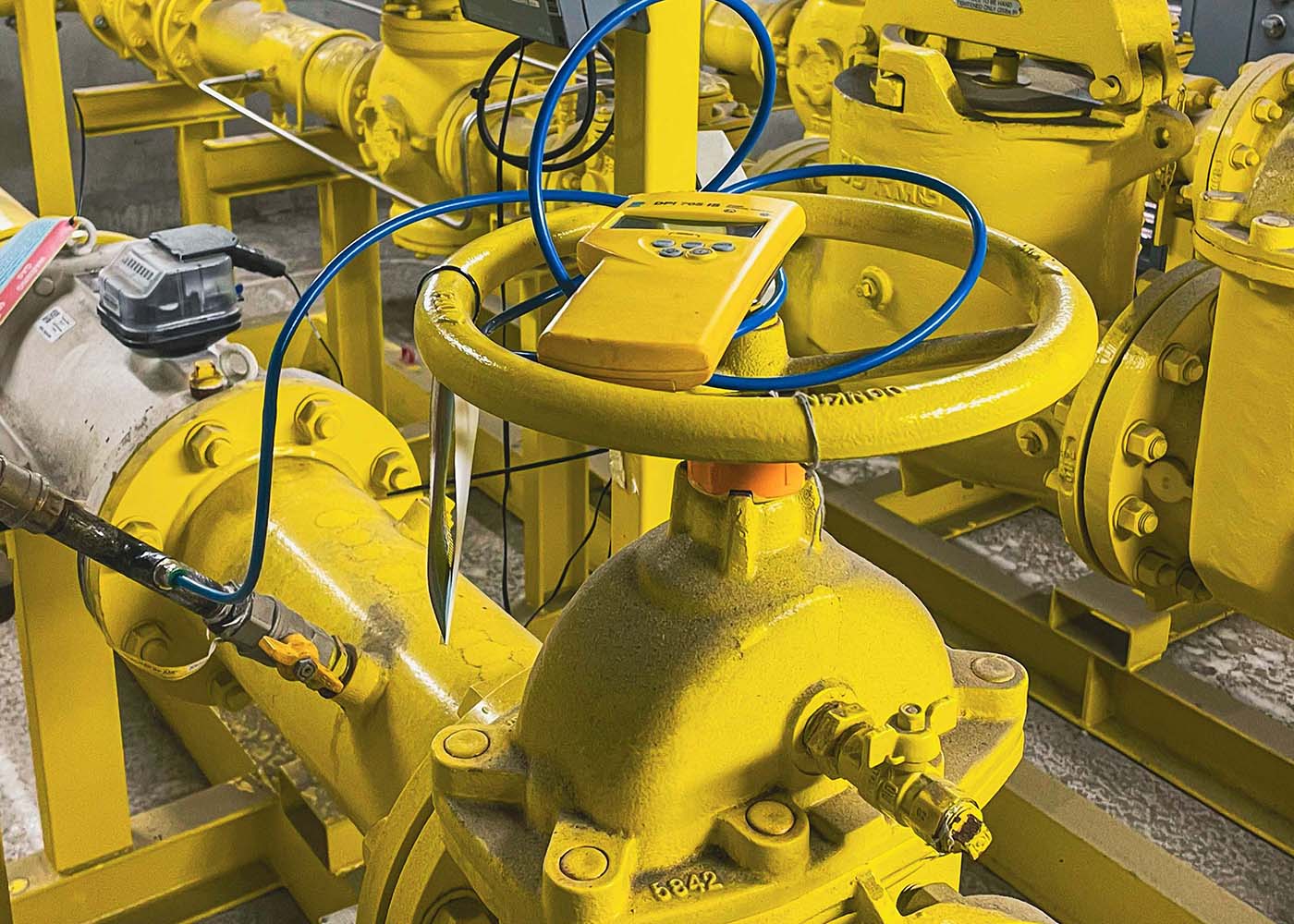
Gas Pipework Testing, Purging, Commissioning & Decommissioning
Into Service, Or Out
Bridge Heating & Gas Services Ltd carries out commercial gas pipework testing, purging, commissioning, recommissioning, and decommissioning across Essex, Kent and London, covering the work required to safely bring new or altered systems into service, return dormant installations to operation, or isolate and remove redundant sections from live premises.
Gas registered since 2003, we bring over 20 years of commercial gas experience to work that must be carried out methodically and documented properly. This includes strength testing, tightness testing, direct and indirect purging, gas-in-air procedures where applicable, recommissioning checks, decommissioning of redundant pipework, and certification to support contractors, consultants, insurers, and building operators.
On site, testing and purging are not separate from commissioning and decommissioning. They are usually part of the same controlled process. Whether you need pre-commissioning checks on a new installation, recommissioning of a dormant system, or controlled decommissioning of redundant pipework, the work is documented, certified, and backed by a 12-month workmanship guarantee under our standard terms.
When This Type of Work Is Needed
We are commonly involved where:
- new commercial gas pipework has been installed and must be tested and commissioned before use
- an existing installation has been extended or altered and requires re-test and certification
- a dormant or isolated system is being brought back into service
- part of a plant room or gas distribution system is being permanently taken out of use
- redundant appliances or branches need to be decommissioned and capped safely
- insurers, auditors, or clients require formal test records
- plant replacement or refurbishment works need gas infrastructure taken out of service and then reinstated properly
The process and documentation depend on the site, the system volume, the design, the occupancy, and the standard that applies. That is why this work should not be treated as an afterthought once the physical pipework is in place.
Scope of Works
Our commercial gas pipework work in this area can include:
- strength testing and tightness testing of new and existing pipework
- direct purging and indirect purging procedures as applicable
- recommissioning of dormant installations
- commissioning of new branches, appliances, and complete systems
- decommissioning of live or redundant gas pipework
- safe isolation and capping of redundant sections
- checking installation readiness before gas is introduced
- documenting test results and issuing certification on completion
- coordinating with appliance commissioning, plant room works, controls contractors, and main contractors where required
Where the job also includes new pipework installation or alterations, we can usually manage that under the same package so the client is not splitting responsibility between installers and commissioning specialists.
Standards, Certification, and Paperwork
Testing, purging, and commissioning work is carried out to the relevant IGEM standards and gas industry procedures applicable to the installation. Depending on system type, size, and arrangement, this work is carried out to the relevant IGEM standards, typically IGEM/UP/1 Ed.2 for installations outside the IGEM/UP/1B scope (pipe diameter up to 35mm and internal volume up to 0.035m³), with IGEM/UP/2 covering installation pipework on industrial and commercial premises.
On completion, we can provide the relevant certification and records required for the job, including:
- commercial gas testing records
- purging documentation
- CP16 and CP17 certification where applicable
- handover information relating to the gas side of the works
The point is not paperwork for its own sake. It is to leave a clear record showing what was tested, what standard was followed, what was purged, and what was put into or taken out of service.
Commissioning New or Altered Systems
Commissioning is the controlled stage between installation and operation. Before a system is left live, the gas side needs to be confirmed as safe, sound, and ready for service. Depending on the project, that can include:
- confirming the installation is complete before introducing gas
- carrying out the correct pressure testing sequence
- purging pipework safely
- verifying soundness after gas introduction
- ensuring isolation arrangements are correct
- coordinating with appliance commissioning or burner specialists
- recording the work carried out and issuing the relevant certificates
This is particularly important on boiler house upgrades, plant room refurbishments, catering installations, and phased works where only part of a live system is being altered at one time.
Recommissioning Dormant Installations
Dormant systems can create problems if they are treated as though they were simply paused yesterday. Pipework condition, previous alterations, isolation history, and site knowledge all matter.
Before returning a dormant installation to service, we can assess:
- whether the pipework is still suitable for use
- what testing sequence is required
- whether purging is needed and by what method
- whether appliances and controls are ready to be brought back online
- whether any sections should remain isolated or be permanently removed
That is a safer and more defensible approach than assuming an old system can just be turned back on.
Decommissioning Redundant Pipework Safely
Decommissioning is not just disconnecting an appliance and leaving the rest for later. On commercial sites it should be planned, recorded, and carried out in a way that leaves no ambiguity about what remains live and what does not.
Typical decommissioning work includes:
- isolating and making safe redundant appliances or branches
- purging down and capping dead legs or obsolete sections
- removing or identifying redundant pipework where required by scope
- documenting the part of the system taken out of service
- coordinating with wider refurbishment or demolition works
This is especially important where old plant rooms have grown over time and multiple historic modifications have left poor labelling or unclear pipework history.
Sites and Systems We Commonly Work On
Typical environments include:
- commercial boiler houses and plant rooms
- schools and educational premises
- care homes and healthcare-related buildings
- hotels and leisure facilities
- churches and community buildings
- warehouses, factories, and industrial premises
- commercial kitchens and catering environments
- mixed-use commercial property portfolios
Some jobs are straightforward. Others involve live buildings, restricted shutdown windows, or phased programmes. That affects planning, but not the standard expected.
Why Use Bridge for Testing, Purging, and Commissioning Work
Clients typically use Bridge Heating & Gas Services Ltd because they need:
- commercial gas competence
- one contractor who understands both the pipework and the operational pressures of live sites
- clear certification and handover records
- practical coordination with wider heating or plant room works
- a realistic view of what can and cannot be done safely within the time available
This type of work is easy to get wrong if it is rushed, poorly documented, or separated from the reality of the site. We keep it structured and clear.
Areas Covered
Bridge Heating & Gas Services Ltd supports commercial gas pipework projects across Essex, Kent and London.
If you need testing, purging, commissioning, recommissioning, or decommissioning of commercial gas pipework, contact us to discuss the installation, scope, and documentation required.
Pricing
Testing, purging, commissioning, and decommissioning work is quoted individually based on the system, scope, and certification required. Our standard commercial rates are published on our Pricing page. All pricing is exclusive of VAT.
Request a Quote or Discuss Your Project
To discuss testing, purging, commissioning, or decommissioning work, please provide:
- Site address and project details
- Description of the installation (new, altered, dormant, or being decommissioned)
- Approximate pipework volume and design pressure if known
- Any existing drawings, test records, or documentation
- Required certification (CP16, CP17, or other)
- Preferred timing and any project programme constraints
Request quote
We’ll only use these details to reply to your enquiry. See our Privacy Policy.
More information
Our Client Reviews
What schools, care homes, museums and manufacturers say about working with us.
Accreditations
Gas Safe registered, CHAS accredited, and the qualifications behind the work.
Our Pricing
Published rates for callouts, servicing, gas safety inspections and Service Agreements.
Certificates available on request
Fast response when plant fails
Certificates for your records
Transparent commercial pricing
WHAT OUR CUSTOMERS SAY
“We use Andrew for all our gas servicing – boilers, science lab installations, food tech equipment, interlock systems, pipework tightness testing. Everything scheduled efficiently, completed to a high standard, and documented clearly. One reliable contractor for all our gas compliance.”
“Andrew understands the importance of maintaining our gas boilers and air handling units which serve on site laboratories with very precise temperature requirements – reliability and accuracy are critical for us. Strong technical knowledge and a structured approach throughout; whether it's servicing, repairs or commissioning, everything is handled professionally with clear documentation. I would not hesitate to recommend Andrew of Bridge Heating & Gas for any Heating & Gas Services.”
“Bridge Heating & Gas Services have been maintaining our process plant for over 10 years and designed and installed a bespoke system tailored specifically to our operational needs, supplying high volumes of hot water at over 100°C. Andrew's understanding of our site and requirements has built up over the years and that experience shows – reliable, technically capable and a contractor we trust completely.”