
Commercial Gas Safety FAQ
Your Legal Duties Explained
Business Compliance & Safety Certification Questions
These FAQs relate to gas safety for commercial premises: schools, care homes, hotels, factories, offices, retail, and FM-managed portfolios.
Commercial gas safety sits in a different legal framework to domestic rentals. There is no statutory “commercial CP12”. The legal duty is to maintain gas installations in a safe condition under the Gas Safety (Installation and Use) Regulations 1998, with the specific inspection interval typically driven by insurance policy, lease terms, and sector regulation (CQC for care, educational duties for schools, and so on). In practice most commercial sites run annual gas safety inspections as standard.
The exception is where gas appliances serve living accommodation. In hotels and B&Bs, any appliance serving guest accommodation needs an annual gas safety check, even if it sits away from the rooms. The same applies to communal boilers serving flats, which must be checked as part of the landlord’s annual gas safety check.
How much does a commercial gas safety certificate cost?
Commercial gas safety certificate pricing depends on the size and complexity of your installation: number of appliances, plant room scale, catering equipment, and overall scope. Multi-appliance and multi-site work is quoted on a tailored basis.
Our full standard rates are published on our Pricing page, including per-appliance pricing, catering uplifts, and Service Agreement structures. All pricing is exclusive of VAT.
What is the scope of a commercial gas safety inspection?
Commercial gas safety inspections cover business premises with gas installations, focusing on:
- Commercial-classified systems and appliances
- Multiple appliances and complex installations
- Commercial cooking equipment and industrial appliances
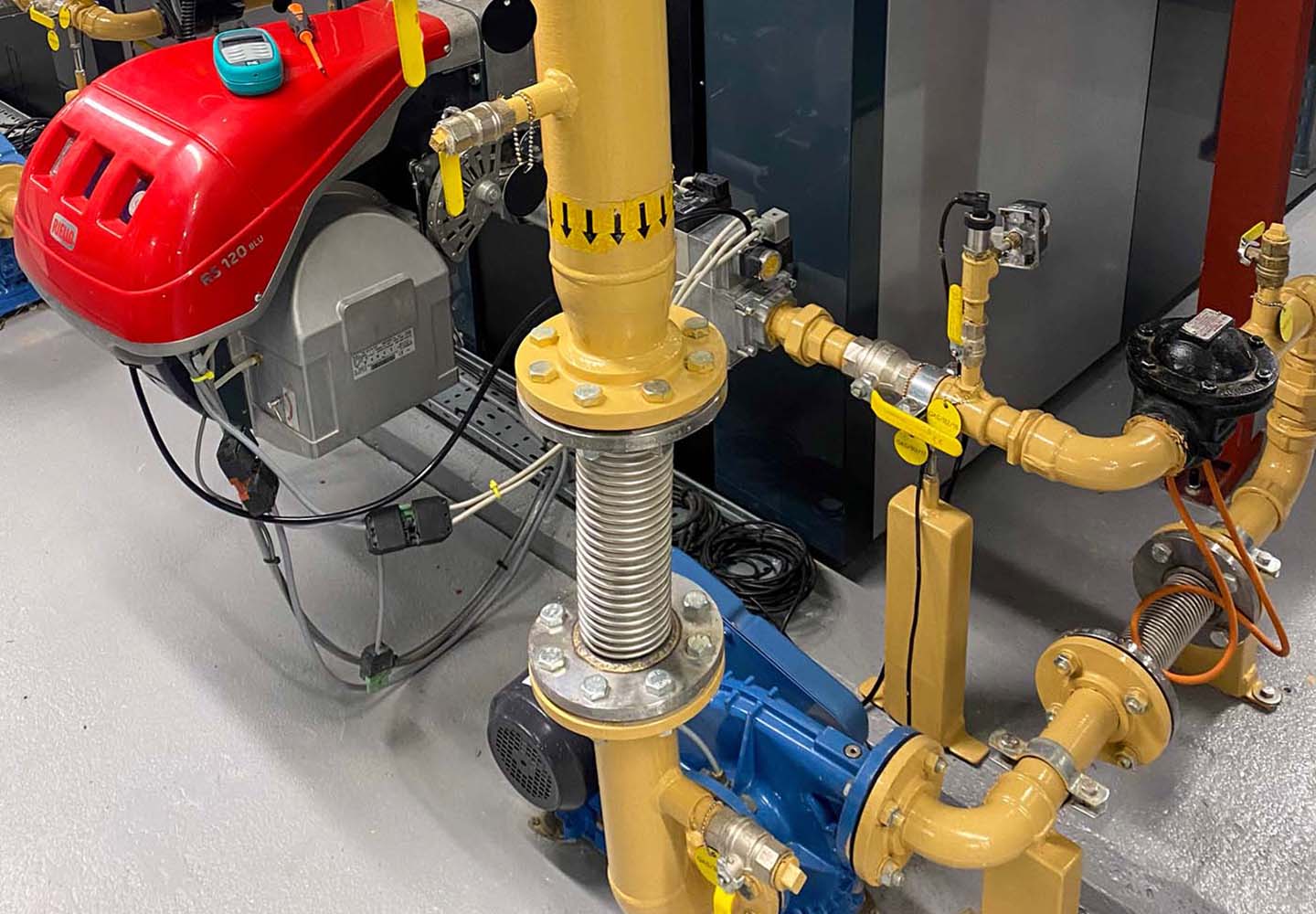
- Plant room installations, multi-boiler cascades, and warm-air heaters
- Business compliance with the Gas Safety (Installation and Use) Regulations 1998
Who typically needs commercial gas safety inspections?
Commercial gas safety inspections apply across the range of commercial settings:
- Commercial Landlords: Tenanted business premises with gas installations
- Employers: Any workplace with gas appliances. GSIUR 1998 places a duty to maintain installations in a safe condition
- Facilities Managers: Responsible for commercial building safety across single or portfolio sites
- Business Owners: Commercial premises with gas-fired equipment
- Schools and Colleges: Educational facilities with gas installations, often inspected during school holiday periods
- Care Homes: Supports CQC compliance and resident safety
- Hotels and Hospitality: Commercial kitchens and heating systems
- Retail Premises: Shops with gas heating or cooking equipment
The Gas Safety (Installation and Use) Regulations 1998 require that gas installations are maintained in a safe condition. The specific inspection interval is typically driven by insurance policy terms, lease requirements, and the regulatory framework applicable to your sector. Annual inspections are standard industry practice for most commercial settings. Where appliances serve guest rooms or flats, an annual gas safety check is a legal requirement.
How often do commercial properties need gas safety checks?
Annual gas safety inspections are recommended for most commercial properties. The intervals below are what we recommend and what insurers, regulators and site policies commonly expect; your own lease, insurance or sector requirements take precedence.
- Schools: Annual, with some schools choosing termly checks
- Care Homes: Annual, more frequent for high-use systems
- Commercial Kitchens: Annual, quarterly for heavy use
- General Offices: Annual inspections typically sufficient
- Industrial: Risk-assessed frequency based on plant criticality
Insurance policies often mandate annual certification. Check your policy to confirm requirements.
What does a commercial gas safety inspection include?
Our commercial gas safety inspections cover:
- Gas meter condition and location
- Emergency control valve accessibility and operation
- Complete pipework inspection and tightness testing
- All commercial gas appliances (boilers, cookers, heaters, etc.)
- Combustion analysis and efficiency testing
- Ventilation adequacy for all gas appliances
- Flue systems and safe combustion product removal
- Safety device operation and testing
- Installation compliance with current regulations
After the inspection we issue a commercial gas safety record. Where issues are identified, we provide prioritised recommendations for remedial work.
How long does a commercial gas safety inspection take?
Timing depends on the size and complexity of your commercial installation:
- Single small commercial unit: 1–2 hours
- Small office or shop (2–3 appliances): 2–3 hours
- Medium commercial property (5–10 appliances): Half day
- Large multi-appliance site: Full day or more
We schedule inspections to minimise business disruption and can work outside normal business hours where preferred.
What happens if your installation fails a commercial gas safety check?
Where safety issues are identified during inspection, you receive:
- A detailed report with prioritised findings
- Critical safety issues classified per Gas Industry Unsafe Situations Procedure (GIUSP): Immediately Dangerous (ID) or At Risk (AR)
- Clear recommendations for remedial work
- A quotation for required repairs if requested
- Re-inspection and certification once work is completed
Some issues can be resolved immediately during the inspection visit. More significant work may require scheduling and parts procurement.
Is commercial gas safety a legal requirement?
Yes, with an important nuance. The Gas Safety (Installation and Use) Regulations 1998 place a duty to maintain gas installations and appliances in a safe condition. Unlike domestic rentals (which require an annual CP12 certificate), commercial premises are covered by the broader “safe condition” duty, with specific inspection intervals driven by insurance, lease terms, and sector regulation.
Practical obligations:
- Gas appliances and fittings maintained in a safe condition
- Safety checks by a Gas Safe registered engineer competent for commercial work
- Safety records kept as evidence of compliance
- Prompt action on identified issues (classified per GIUSP as Immediately Dangerous or At Risk)
Annual inspection is standard industry practice, with more frequent checks for high-use or high-risk settings. Failure to maintain installations safely can result in prosecution, fines, and personal liability.
Request quote
We’ll only use these details to reply to your enquiry. See our Privacy Policy.
More information
Our Client Reviews
What schools, care homes, museums and manufacturers say about working with us.
Accreditations
Gas Safe registered, CHAS accredited, and the qualifications behind the work.
Our Pricing
Published rates for callouts, servicing, gas safety inspections and Service Agreements.
Certificates available on request
Fast response when plant fails
Certificates for your records
Transparent commercial pricing
WHAT OUR CUSTOMERS SAY
“Andrew carries out our annual boiler servicing and gas safety inspection and has been reliable for heating repairs when we've needed them at short notice. Seven days a week availability is important for us as a hotel – heating and hot water for guests can't wait – and he's always come through. Dependable and professional.”
“Bridge Heating & Gas Services provide professional servicing and compliance work with a real focus on safety – important for a museum open to the public. They service our warm air heating and radiant tube heaters, often working out of hours to make sure we can maintain a comfortable environment for our visitors and staff.”
“Andrew understands the importance of maintaining our gas boilers and air handling units which serve on site laboratories with very precise temperature requirements – reliability and accuracy are critical for us. Strong technical knowledge and a structured approach throughout; whether it's servicing, repairs or commissioning, everything is handled professionally with clear documentation. I would not hesitate to recommend Andrew of Bridge Heating & Gas for any Heating & Gas Services.”