
Commercial Heating Servicing
Find Faults Before Winter
Commercial heating servicing is about more than ticking a compliance box once a year. On working commercial sites it is part safety check, part condition assessment, and part practical planning exercise to reduce breakdowns, identify wear early, and keep the plant running through the heating season.
Bridge Heating & Gas Services Ltd provides commercial heating servicing for schools, offices, care homes, hotels, churches, public buildings, industrial premises, and FM-managed sites. We are Gas Safe registered (199240), based in Upminster, Essex, working across Essex, Kent and London, and have been handling commercial gas and heating systems since 2003.
Commercial sites often involve multiple appliances, plant room safety systems, interlocks, controls, pumps, water-side issues, access restrictions, and live operational pressures. A proper service needs to reflect that.
What Commercial Heating Servicing Is There To Achieve
Routine servicing helps you:
- maintain safe operation of gas-fired plant and associated equipment
- reduce the risk of avoidable breakdowns during peak demand
- identify worn components, combustion issues, leaks, corrosion, and controls faults earlier
- maintain more consistent efficiency and plant performance
- support insurer, landlord, facilities, and audit requirements
- build a clearer maintenance record for budgeting and asset planning
Servicing does not guarantee that a system will not fail later. What it does do is give you a better standard of oversight, a written condition picture, and a better chance of dealing with problems before they become reactive callouts.
What We Commonly Service
We service a wide range of commercial heating equipment, including:
- commercial boilers and boiler cascades
- gas-fired water heaters
- warm air heaters
- radiant tube heaters
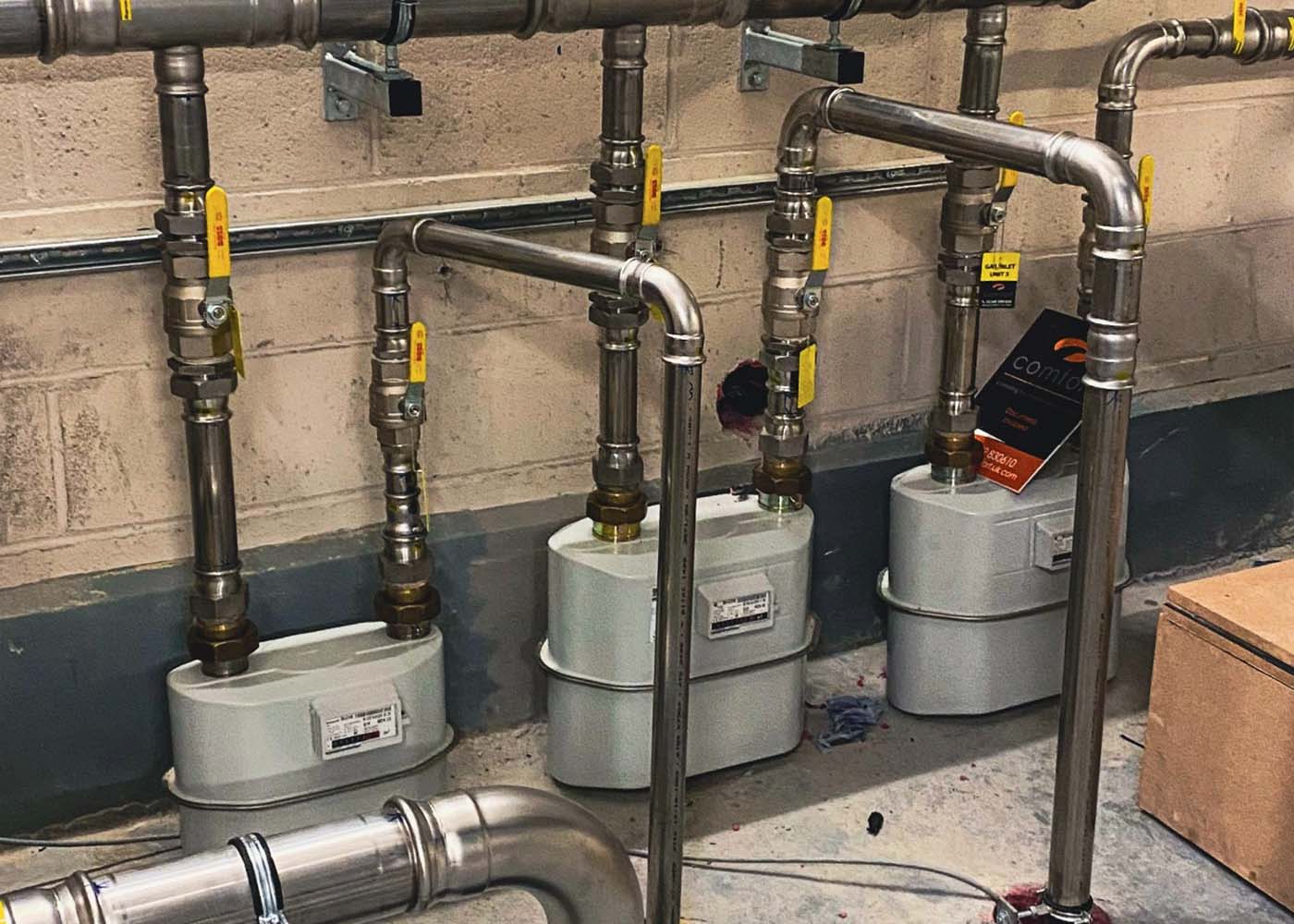
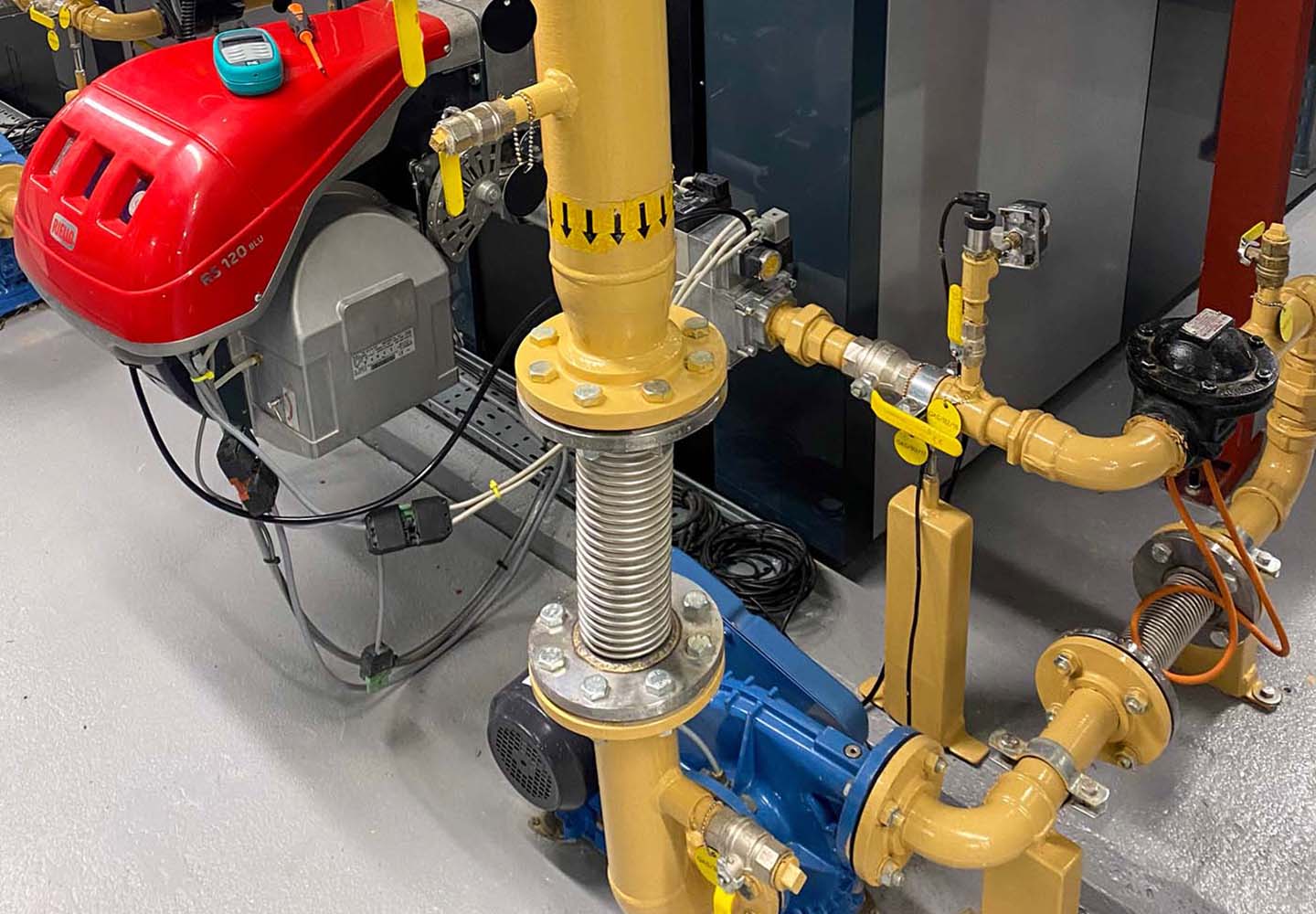
- plant room gas trains, valves, and associated safety controls
- pumps, pressurisation equipment, and expansion arrangements within service scope
- heating controls and BMS-linked heating plant where relevant to plant operation
Some sites want a single annual visit. Others need a structured service calendar with multiple visits, documented records, and better control of plant history across more than one building.
What a Typical Service Visit Includes
The exact scope depends on the appliance type, manufacturer instructions, plant condition, access, and what has been agreed in advance. A typical commercial heating service may include:
- visual inspection of plant condition, installation condition, and immediate safety concerns
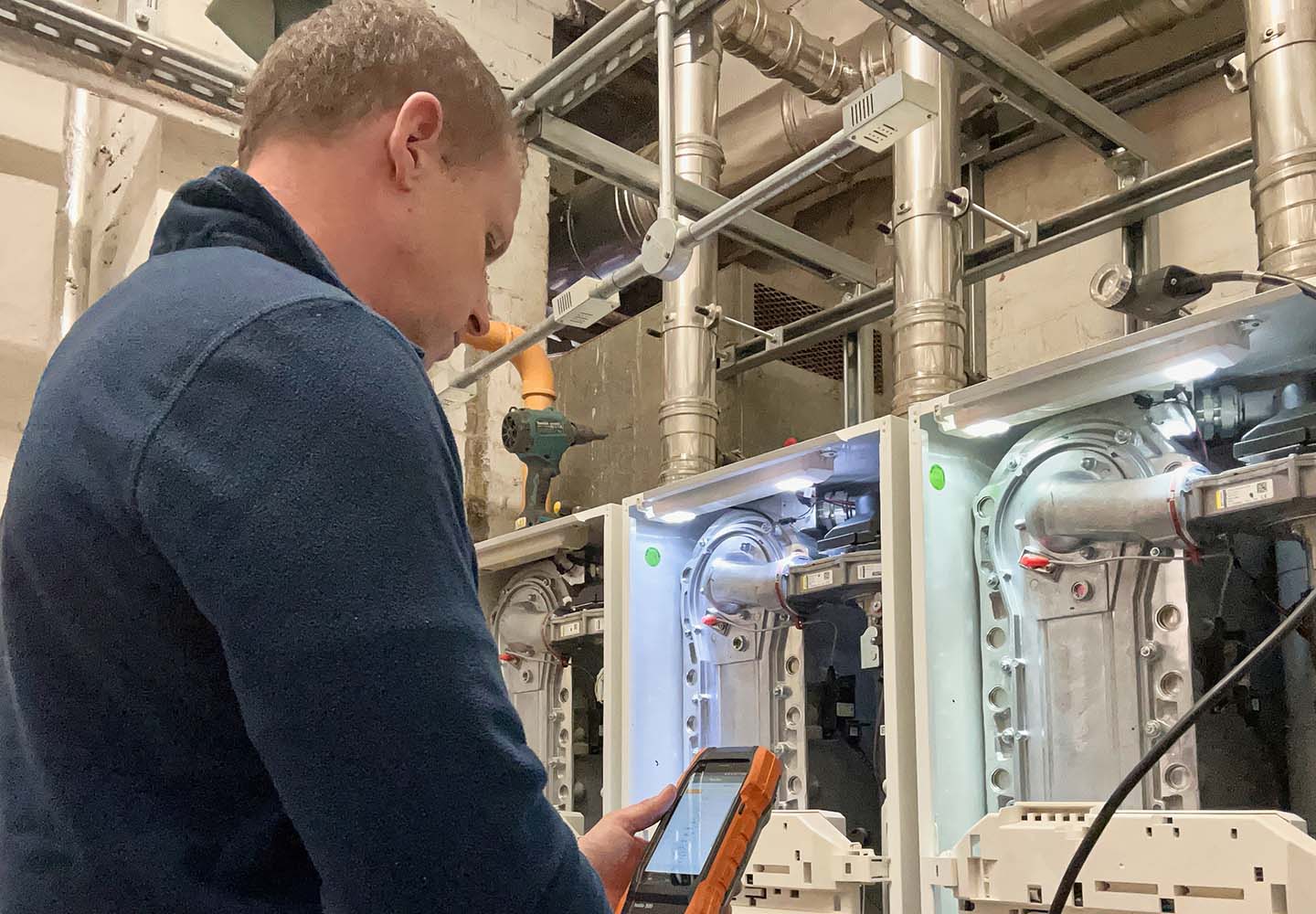
- combustion checks and adjustments where applicable
- inspection and cleaning of burner, heat exchanger, ignition components, and combustion pathways where accessible
- testing of safety devices, interlocks, proving switches, and relevant controls within service scope
- inspection of flueing, ventilation, condensate arrangements, and gas soundness indicators where applicable
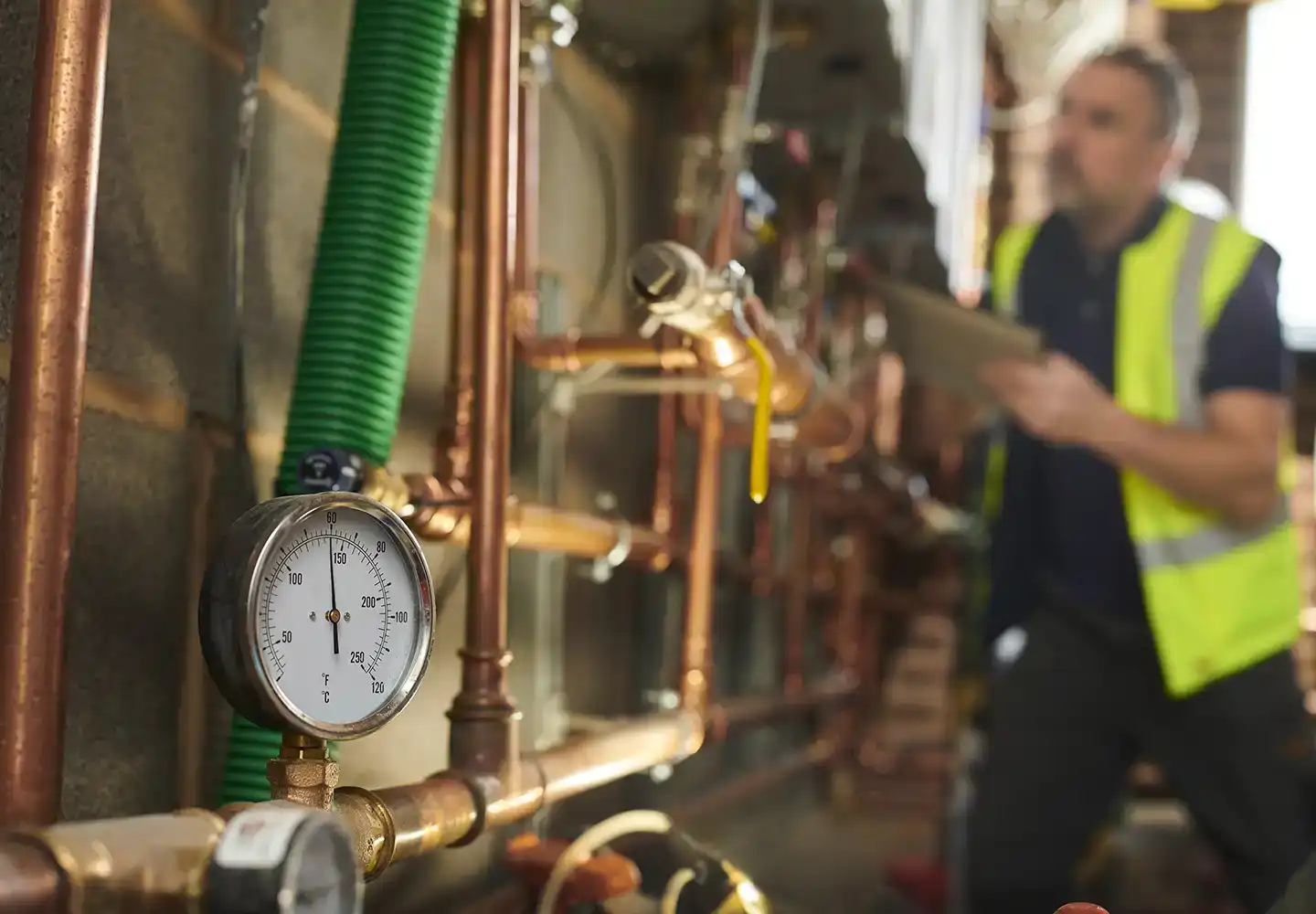
- operational checks on pumps, valves, controls, and system response relevant to the serviced plant
- recording of defects, limitations, parts required, and recommendations for follow-on works
Where systems are heavily neglected, poorly installed, incomplete, or unsafe, the service report will say so. That is better than papering over problems.
Service Agreements and Planned Preventative Maintenance (PPM)
Our preferred client-facing structure is a Service Agreement. This gives you a clearer commercial arrangement for planned servicing, record keeping, priority response, and ongoing support.
Many clients and facilities teams know this as planned preventative maintenance (PPM).
Service Agreements are usually the better fit where you have:
- more than one appliance or multiple plant items on site
- critical occupancy buildings where downtime matters
- insurer, FM, or landlord reporting requirements
- recurring issues that need better continuity and record keeping
- multiple sites that need a more organised servicing programme
Service Agreement benefits
A structured Service Agreement can include:
- planned servicing dates agreed around your site operations
- appliance and site records kept in a more consistent format
- defect tracking and follow-up recommendations
- better visibility on plant condition and recurring issues
- clearer budgeting for repairs, parts, and future replacement
- Service Agreement clients receive priority callout response. For all other callouts, attendance depends on engineer availability, site location, access, parts availability, and current workload.
Ad-hoc servicing is still available, but Service Agreement clients are easier to support properly because the site history, plant layout, and known issues are already understood.
What Servicing Does Not Usually Include
This is an important distinction and many sites blur it.
A routine service does not usually include:
- major repair works
- replacement of failed parts unless agreed separately
- extensive system draining and rebuilding
- chemical water treatment works
- remedial pipework alterations
- controls upgrades or rewiring outside normal service scope
- access equipment, specialist permits, or out-of-hours working unless agreed
If defects are found, we record them clearly and quote follow-on work separately where required. That keeps the service record honest and avoids confusion over what has and has not been done.
When to Book a Service
In most cases, the best time to service commercial heating plant is before winter demand increases. Leaving servicing until the cold weather has already started is when sites discover the faults they should have found earlier.
A service is particularly worth arranging when:
- the site is approaching the heating season
- the appliance has not been serviced for some time
- there are recurring lockouts, faults, or nuisance trips
- the plant has recently been altered, upgraded, or partially repaired
- an insurer, auditor, landlord, or facilities manager requires current service records
- you are taking over responsibility for a new site and need an honest view of plant condition
What We Need Before Attending
To help us scope the service properly, it helps if you can provide:
- site address and access contact details
- appliance make, model, and approximate output if known
- plant list or photos of the plant room / appliances
- any fault history, outstanding defects, or known concerns
- preferred attendance dates and site restrictions
- whether you want a one-off service or a Service Agreement proposal
The more accurate the information up front, the more likely we can plan the visit properly and avoid wasted time on site.
Request quote
We’ll only use these details to reply to your enquiry. See our Privacy Policy.
More information
Our Client Reviews
What schools, care homes, museums and manufacturers say about working with us.
Accreditations
Gas Safe registered, CHAS accredited, and the qualifications behind the work.
Our Pricing
Published rates for callouts, servicing, gas safety inspections and Service Agreements.
Certificates available on request
Fast response when plant fails
Certificates for your records
Transparent commercial pricing
WHAT OUR CUSTOMERS SAY
“Andrew covers all our plant rooms for heating and hot water servicing and has been really reliable for servicing and repairs throughout. Our pool heating needs specialist attention and the pool is critical for us, so quick response and minimal downtime matter – both have been excellent. Professional, knowledgeable and we wouldn't hesitate to recommend him.”
“Andrew understands the importance of maintaining our gas boilers and air handling units which serve on site laboratories with very precise temperature requirements – reliability and accuracy are critical for us. Strong technical knowledge and a structured approach throughout; whether it's servicing, repairs or commissioning, everything is handled professionally with clear documentation. I would not hesitate to recommend Andrew of Bridge Heating & Gas for any Heating & Gas Services.”
“Bridge Heating & Gas Services have maintained our boilers, heating and hot water for several years. When the time came to upgrade, they managed the full plant room overhaul and installed a more efficient system. They handle all our gas safety requirements and the certification always comes through promptly – reliable and professional.”